What Is Sound Engineering? A Guide for Beginners
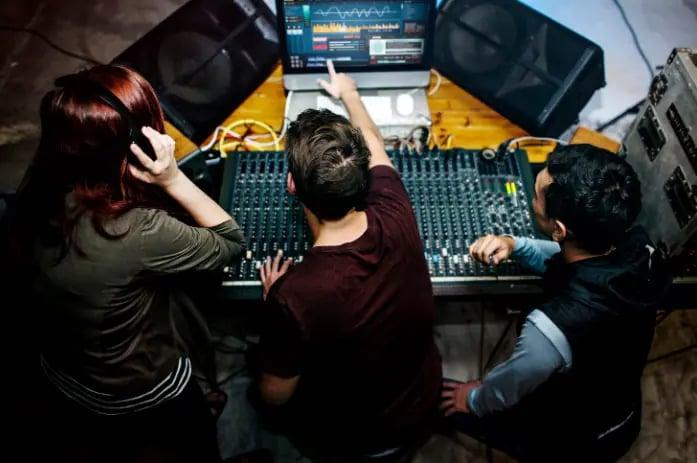
Every song you have ever loved — every perfectly balanced vocal, every punchy kick drum, every reverb tail that fades beautifully into silence — is the result of sound engineering. Behind every great recording stands a sound engineer who understood how to capture, shape, balance, and master audio with precision and artistry. Yet for most aspiring music creators, sound engineering remains one of the most misunderstood, underestimated, and underappreciated skills in the entire music production chain.
In 2026, sound engineering is no longer a separate discipline reserved for professionals in expensive recording studios. The democratization of music technology has placed professional-grade recording, mixing, and mastering tools in the hands of independent artists worldwide — meaning that today’s bedroom producer is also today’s recording engineer, mix engineer, and mastering engineer, all at once. As one industry educator put it: the days of “the producer makes the music, then sends it to the engineer” are largely over, especially in independent music. Sound engineering skills are no longer optional extras. They are core competencies for any serious independent artist.
This complete beginner’s guide covers everything you need to understand about sound engineering — what it actually is, how it differs from music production, the core disciplines it encompasses, the essential tools and concepts you need to learn, the career paths available in 2026, how AI is changing the field, and how the sound engineering journey connects to releasing your music globally through A3 Tunes. Whether you are an aspiring professional sound engineer or an independent artist who wants to take control of your own recording and mixing, this guide will give you a clear, honest foundation to build on.
What Is Sound Engineering? The Complete Definition
Sound engineering is the technical and creative practice of capturing, manipulating, processing, and reproducing audio to achieve a desired sonic result. It encompasses everything that happens to sound from the moment it enters a microphone to the moment a listener hears the finished recording on their headphones, speakers, or streaming platform.
Sound Engineering vs Music Production — Understanding the Difference
These two terms are often used interchangeably, but they describe distinct roles. Music production is the broader creative process of developing a song or album — writing, arranging, selecting sounds, shaping the artistic direction, and guiding the creative vision. Sound engineering is specifically focused on the technical audio processes — recording, mixing, signal processing, and mastering — that transform raw recorded material into polished, professional audio.
In traditional professional studios, these were separate roles. A music producer guided the artistic direction while a sound engineer handled the technical execution. Today, in the independent music economy, one person frequently fills both roles simultaneously. An independent artist who records their own vocals, programs their own beats, mixes their own tracks, and masters for streaming is practicing both music production and sound engineering — whether they use those labels or not.
The Three Core Pillars of Sound Engineering
Every sound engineering workflow, regardless of genre or context, is built on three foundational pillars. Recording is the process of capturing audio — using microphones, direct inputs, and signal chains to convert acoustic energy into digital audio data. Mixing is the process of combining, balancing, and processing individual recorded tracks — using EQ, compression, reverb, delay, and dozens of other tools — into a cohesive, well-balanced stereo or spatial audio output. Mastering is the final stage of audio processing, optimizing the mixed stereo file for distribution across all playback systems and streaming platforms.
Each pillar requires distinct skills, tools, and knowledge. Most beginners underestimate the depth of expertise each one contains.
Why Sound Engineering Matters for Independent Artists
With over 120,000 tracks uploaded to streaming platforms every single day, the quality gap between well-engineered music and poorly-engineered music has never been more consequential. Listeners make split-second decisions — often within the first five seconds of a track — about whether music sounds professional enough to continue listening. Poor recording quality, unbalanced mixes, and poorly mastered audio signal amateurism instantly, regardless of how strong the songwriting or performance underneath actually is.
Sound engineering is the bridge between your creative vision and the listener’s experience. Get it right and your music sounds as good as any professional release. Get it wrong and even the best song in the world sounds like a rough demo.
The Core Disciplines of Sound Engineering
Sound engineering is not a single skill but a family of related disciplines. Understanding each one gives beginners a clearer picture of where to focus their learning.
Recording Engineering — Capturing Sound Properly
Recording engineering is the art and science of capturing audio cleanly, accurately, and with the sonic characteristics that serve the final mix. A recording engineer makes decisions about microphone selection and placement, signal chain design, gain staging, room acoustics, and session management that fundamentally shape the quality of everything that follows.
The most important truth about recording is that problems captured at this stage are extremely difficult to fix later. A badly recorded vocal — with room noise, distortion, or poor microphone placement — will sound bad no matter how skillful the subsequent mixing. Good sound engineering begins at the recording stage, not the mixing stage.
Key skills in recording engineering include understanding microphone types and polar patterns, signal chain management from microphone through preamp to interface, gain staging and headroom management, acoustic treatment and room sound management, and session organization and file management.
Mixing Engineering — Balancing and Shaping Sound
Mixing is where the creative and technical aspects of sound engineering converge most dramatically. A mix engineer takes individual recorded tracks — drums, bass, guitars, vocals, synths, samples — and uses EQ, compression, reverb, delay, saturation, stereo imaging, and dozens of other processes to create a final stereo mix where every element is audible, balanced, and emotionally effective.
Great mixing is invisible. When a mix is done well, the listener experiences the music — not the technical craftsmanship behind it. They feel the emotion of the vocal without consciously noticing the subtle compression that keeps it sitting perfectly in the mix. They experience the power of the drums without hearing the multiband compression and parallel processing that creates that power.
Key skills in mixing engineering include equalization theory and practice, dynamics processing (compression, limiting, gating), time-based effects (reverb, delay, chorus, modulation), stereo imaging and panning, automation, gain staging through the mix chain, and reference monitoring and critical listening.
Mastering Engineering — Preparing Music for Distribution
Mastering is the final stage of audio production — the bridge between the finished mix and the distributed product. A mastering engineer takes the stereo mix and applies global processing to maximize clarity, loudness, and consistency across all playback systems, while also preparing the audio for streaming platforms, vinyl cutting, CD pressing, or any other distribution format.
Streaming platforms in 2026 have specific loudness standards — Spotify normalizes audio to approximately -14 LUFS, Apple Music to -16 LUFS. Properly mastered audio sounds competitive and consistent on every platform and every playback system, from earbuds to club speakers. Poorly mastered audio sounds quiet, dull, or harshly loud depending on the platform and context.
Key skills in mastering include broadband and multiband EQ, stereo widening and mid-side processing, transparent limiting and loudness maximization, format-specific delivery (streaming, vinyl, CD), and critical listening on multiple reference systems.
Live Sound Engineering — The Concert and Event World
Beyond the recording studio, live sound engineering is a distinct discipline covering the capture, processing, and reproduction of audio during live performances — concerts, festivals, corporate events, theatre productions, and broadcast. A live sound engineer manages front-of-house mixing (what the audience hears through the main speakers) and monitor mixing (what performers hear through stage monitors or in-ear monitors).
Live sound engineering requires all the same core audio knowledge as studio engineering but adds the complexity of real-time decision-making, unpredictable room acoustics, feedback management, and performance under pressure. Many sound engineers work across both studio and live contexts throughout their careers.
Essential Sound Engineering Concepts Every Beginner Must Learn
Before touching any equipment or software, understanding the fundamental concepts of audio is the most important investment you can make as a beginner sound engineer.
Understanding Sound — Frequency, Amplitude, and the Decibel
Sound is the physical propagation of pressure waves through air. Every sound has two primary characteristics — frequency (how fast the pressure waves oscillate, measured in Hertz and perceived as pitch) and amplitude (how large the pressure wave is, measured in decibels and perceived as loudness).
The human hearing range spans approximately 20 Hz to 20,000 Hz (20 kHz). Sound engineers think in frequency ranges — sub-bass (20-60 Hz), bass (60-250 Hz), low-midrange (250-500 Hz), midrange (500 Hz-2 kHz), upper midrange (2-4 kHz), presence (4-8 kHz), and air (8-20 kHz). Understanding which frequency ranges each instrument occupies, and how they interact, is foundational to every mixing decision.
The decibel (dB) is the unit of measurement for audio levels. Understanding dB scales — dBFS (digital full scale), dBu (professional analog), dBSPL (acoustic sound pressure level) — and how they relate to each other is essential for gain staging, monitoring levels, and delivering correctly-leveled audio to streaming platforms.
The Signal Chain — How Audio Flows Through a System
The signal chain describes the path audio takes from its source to its destination — from acoustic sound through microphone, through preamp, through audio interface, into the DAW, through plugins and processing, through monitoring, and finally to the listener. Understanding every link in this chain — and how each one affects audio quality — is one of the most important skills a sound engineer develops.
Weak links in the signal chain — a poor-quality microphone preamp, a badly-configured interface, or mismanaged gain staging — degrade audio quality in ways that cannot be fully recovered downstream. Professional sound engineers optimize every link in the chain because they understand that audio quality is determined by the weakest link, not the strongest.
Gain Staging — The Most Overlooked Beginner Skill
Gain staging is the practice of managing audio levels at each stage of the signal chain to maximize signal quality while avoiding noise and distortion. It is the single most overlooked concept among beginner sound engineers and one of the most consistently important skills among professionals.
Proper gain staging means setting microphone preamp levels high enough to capture a clean signal above the noise floor, but low enough to avoid clipping or distortion. It means managing levels through the DAW so individual tracks have adequate headroom, buses are not saturating, and the master bus has room to breathe before limiting. A mix with good gain staging sounds open, dynamic, and clean. A mix with poor gain staging sounds compressed, distorted, or noisy even before any deliberate processing is applied.
EQ — Equalization Fundamentals for Beginners
Equalization is the process of boosting or cutting specific frequency ranges in an audio signal. EQ is the most commonly used tool in sound engineering and one of the most nuanced to master. Beginners typically learn to use EQ to cut problem frequencies (muddiness, harshness, boxiness) and enhance desirable characteristics (clarity, warmth, presence).
The two fundamental EQ approaches are corrective EQ — removing problems from audio (cutting mud from a bass guitar, removing harshness from a vocal recording) — and creative EQ — shaping the character of a sound deliberately (adding brightness to a vocal, boosting low-end warmth in a pad). Professional mix engineers use both approaches, often applying corrective EQ first and creative EQ second.
Compression — Dynamics Control for Better-Sounding Music
Compression is the process of reducing the dynamic range of an audio signal — making loud parts quieter and, in effect, making quiet parts more present. Used skillfully, compression gives elements of a mix more consistency, punch, presence, and glue. Used badly, it destroys the natural dynamics of a performance and makes audio sound flat and lifeless.
Key compression parameters include threshold (the level above which compression begins), ratio (how aggressively the compressor reduces levels above the threshold), attack (how quickly the compressor responds to signals crossing the threshold), release (how quickly the compressor stops compressing after the signal drops below the threshold), and make-up gain (volume added after compression to compensate for the overall level reduction).
Understanding how these parameters interact — and developing the ability to hear compression’s effect — takes months of consistent practice. But it is one of the most transformative skills a sound engineer can develop.
Reverb and Delay — Time-Based Effects in Sound Engineering
Reverb and delay are time-based effects that add spatial dimension, depth, and character to recordings. Reverb simulates the natural acoustic reflections of a physical space — a small room, a large hall, a cathedral, a plate reverberator — giving dry, close-recorded audio a sense of space and placement. Delay creates echoes of an audio signal at set time intervals, adding rhythmic interest, width, and depth.
Used subtly, these effects make a mix feel three-dimensional and cohesive. Used excessively, they make a mix sound washed out and unfocused. Learning to apply reverb and delay with discipline — using them to serve the music rather than to mask problems — is a hallmark of developing mix engineering skill.
Essential Tools and Equipment for Beginner Sound Engineers
You do not need a professional studio to begin learning sound engineering. Here is the essential toolkit for starting your journey.
Digital Audio Workstations (DAWs) — The Heart of Modern Sound Engineering
A DAW is the software environment where all recording, editing, mixing, and mastering work takes place. The most widely used DAWs in professional sound engineering include Pro Tools (the industry standard in professional recording studios), Logic Pro (Mac-only, exceptional value with professional-grade tools), Ableton Live (dominant in electronic music and live performance contexts), and FL Studio (widely used in hip-hop, trap, and EDM production).
For beginners on a budget, free and freemium options including BandLab Studio, Cakewalk by BandLab, and Reaper (inexpensive with full professional features) provide genuine capability without significant upfront investment. The choice of DAW matters less than consistency — pick one and commit to learning it deeply before considering a switch.
Audio Interface — Converting Acoustic Sound to Digital Audio
An audio interface is the hardware device that connects your microphones and instruments to your computer, converting analog audio signals to digital data (and vice versa). For beginners, the Focusrite Scarlett Solo (one microphone input), Scarlett 2i2 (two inputs), and PreSonus AudioBox USB 96 are excellent entry-level options that deliver professional-quality conversion at affordable prices.
The audio interface’s preamps — the amplifiers that boost microphone signals to recordable levels — significantly affect recording quality. Even modest-quality interfaces from reputable brands like Focusrite, Universal Audio, SSL, and Audient outperform the built-in audio hardware in most laptops by an enormous margin.
Microphones — The First Link in the Recording Chain
Microphones are among the most consequential gear decisions in recording engineering. The three primary microphone types relevant to most beginners are condenser microphones (highly sensitive, excellent for vocals and acoustic instruments, require phantom power), dynamic microphones (more robust, better at handling high sound pressure levels, great for drums and amplifiers), and ribbon microphones (warm, vintage character, fragile and expensive, used for specific applications).
For home studio recording, a large-diaphragm condenser microphone — such as the Audio-Technica AT2020, Rode NT1, or AKG C214 — is the most versatile starting point for capturing vocals and acoustic sources. Paired with an entry-level audio interface, these microphones deliver professional-quality recordings in treated acoustic environments.
Studio Headphones and Monitor Speakers — Critical Listening Tools
Making accurate mixing and mastering decisions requires accurate playback. Studio headphones and monitor speakers are engineered to reproduce audio as flat and uncolored as possible — unlike consumer headphones and speakers that deliberately enhance bass or treble to sound pleasing.
For beginners, quality studio headphones — such as the Audio-Technica ATH-M50x, Beyerdynamic DT 770 Pro, or Sony MDR-7506 — are more practical and affordable than studio monitors. They allow mixing in any environment without concern for room acoustics. Studio monitors — from brands including Yamaha, Adam Audio, Genelec, KRK, and Focal — offer a more natural listening experience but require acoustic treatment in the room to be accurate.
Plugins — Software Tools That Power Modern Mixing
Plugins are software-based audio processors that extend a DAW’s built-in capabilities. Every DAW includes a suite of built-in plugins — EQs, compressors, reverbs, delays — that are sufficient for professional-quality results. Third-party plugins from companies including Waves, Fabfilter, Universal Audio, iZotope, and Plugin Alliance offer additional options with different sonic characters and workflow advantages.
Beginners should focus on deeply understanding their DAW’s built-in plugins before investing in third-party options. The fundamental skills of EQ, compression, and effects use are transferable across all plugins — the tool matters less than the understanding of what to do with it.
Step-by-Step Workflow for Beginner Sound Engineers
Understanding the workflow of a complete engineering session helps beginners understand how the pieces fit together.
Step 1 — Acoustic Treatment and Studio Setup
Before recording anything, prepare your recording environment. Soft furnishings absorb sound reflections and reduce room noise. A dedicated recording space — even a treated closet or small room — significantly improves recording quality. Acoustic foam panels, bass traps, and diffusers control problematic reflections that color recordings and make accurate monitoring difficult.
Many beginners skip acoustic treatment and then wonder why their recordings and mixes sound different on other systems. Room acoustics are one of the most impactful factors in sound quality and one of the most overlooked by beginners.
Step 2 — Setting Up the Signal Chain and Gain Staging
Connect your microphone to your audio interface, set preamp gain appropriately (targeting peaks around -18 to -12 dBFS in the DAW), configure your DAW’s sample rate and buffer size, and verify your signal path is working cleanly before recording begins. Check for ground hum, cable noise, and interference before starting a session — these problems are much easier to fix before recording than after.
Step 3 — Recording With Intention and Multiple Takes
Record with clear intention about what you are capturing. Use a pop filter for vocal recordings. Record multiple takes for critical performances. Use headphone mixes that allow performers to hear themselves comfortably without leakage into the recording microphone. Label and organize your tracks clearly from the start — session organization is a professional habit that beginners undervalue.
Step 4 — Editing and Comping — Building the Best Performance
After recording, edit individual tracks to remove noise, correct timing, and comp (compile) the best performance from multiple takes. Vocal comping — selecting the best phrases and lines from multiple takes to create a composite performance — is one of the most impactful editing processes in modern recording. Even world-class singers comp their vocals.
Step 5 — Mixing — Building the Sonic Picture
Begin mixing by setting rough fader levels that create a basic balance without any processing. Then apply corrective EQ to remove problem frequencies, compression to control dynamics, and creative EQ to shape individual characters. Add reverb and delay to create depth and space. Pan elements across the stereo field. Build automation to create movement and dynamic interest throughout the song.
Compare your mix regularly to professional reference tracks in the same genre — this process (referencing) is one of the fastest ways to identify where your mix is falling short.
Step 6 — Mastering — Preparing for the World
After completing the mix, export a high-resolution stereo file (24-bit WAV at 44.1 kHz or higher) and apply mastering processing. Correct any tonal imbalances with gentle broad EQ strokes. Apply transparent compression and limiting to achieve competitive loudness (approximately -14 LUFS integrated for most streaming platforms). Check mono compatibility. Export delivery files in the formats required by your distribution platform.
AI Tools Transforming Sound Engineering in 2026
Artificial intelligence has become one of the most significant forces in sound engineering in 2026 — not replacing the engineer but dramatically accelerating workflows and lowering barriers for beginners.
AI-Powered Mixing Assistants and Intelligent Suggestions
AI mixing tools like iZotope Neutron, Waves StudioRack, and RoEx Automix analyze your tracks and suggest EQ, compression, and panning decisions based on the sonic content of your audio. They function as a second pair of ears — identifying problems that beginner ears might miss and suggesting solutions that teach as much as they fix. These tools are particularly valuable for beginners who have not yet developed the critical listening skills to identify mixing problems independently.
AI Mastering — Professional-Grade Results for Beginners
AI mastering platforms including LANDR, eMastered, and CloudBounce have made professional-quality mastering accessible to independent artists who cannot afford professional mastering engineers. LANDR alone has mastered over five million tracks. These platforms analyze your mix and apply tailored processing to achieve competitive streaming loudness, correct tonal balance, and appropriate stereo width — delivering results in minutes.
For independent artists releasing music through A3 Tunes, AI mastering provides an affordable path to streaming-ready audio that meets the quality expectations of major platforms. Explore our complete guide on how to make music and release for a full walkthrough of the production-to-distribution workflow.
Stem Separation — Creative Applications and Remix Culture
Stem separation tools like LALAL.ai can separate completed mixes into up to ten individual stems — vocals, drums, bass, guitars, synths — with minimal audio artifacts. This enables beginners to study professional mixing decisions by isolating individual elements, create remixes and sample-based productions from existing recordings, and recover stem files from completed mixes for re-mixing.
Audio-to-MIDI Conversion and Intelligent Editing
Tools like Basic Pitch convert polyphonic audio recordings to MIDI data directly in the browser, allowing producers to turn recorded performances into editable MIDI that can drive virtual instruments. AI-powered noise reduction tools like iZotope RX can remove background noise, hum, clicks, pops, and room reverb from problem recordings with extraordinary precision — rescuing audio that would previously have been unusable.
Career Paths in Sound Engineering for 2026
Sound engineering supports diverse professional pathways — from recording studio work to live event production, broadcast, gaming, film, and beyond.
Recording Studio Engineer
Studio engineers work in professional recording facilities, capturing and mixing music for artists across genres. Entry-level studio engineers typically start as studio assistants or runners — learning the environment, equipment, and professional workflows before taking on engineering responsibilities. Mid-level engineers with established client bases in 2026 earn approximately $48,000 to $70,000 annually. Senior engineers and studio owners can earn $70,000 to $100,000 or more.
Freelance Mixing and Mastering Engineer
Many sound engineers build successful independent freelance careers offering mixing and mastering services to independent artists, record labels, and content creators. The rise of remote collaboration tools and file-sharing platforms has made it possible to build a global client base from a home studio. Freelance rates range from modest hourly rates for beginners to $50 or more per hour for experienced engineers with strong reputations.
Live Sound Engineer
Live sound engineers work concerts, festivals, corporate events, theatre productions, and broadcast, managing audio systems and mixing performances in real time. Front-of-house engineers manage what the audience hears. Monitor engineers manage what performers hear. This career path demands both technical expertise and the ability to make rapid decisions under pressure.
Post-Production and Broadcast Audio Engineer
Sound engineering skills translate directly into post-production for film, television, advertising, and podcasting. Dialogue editing, sound design, ADR (automated dialogue replacement), Foley, and mix for picture require specialized skills but are built on the same foundational audio engineering knowledge as music production engineering.
Gaming and Interactive Audio Engineer
The gaming industry employs audio engineers specializing in interactive audio design — creating sound effects, music systems, and adaptive audio that responds to player actions. Spatial audio and immersive audio design are particularly in-demand skills in the gaming sector in 2026.
How to Learn Sound Engineering as a Beginner in 2026
The path from beginner to proficient sound engineer in 2026 has never had more available resources — formal and informal.
Formal Education — Degrees and Diplomas
Many universities and specialist music schools offer undergraduate and postgraduate degrees in music production and sound engineering. These programs provide structured learning, access to professional equipment, and industry connections. However, formal education is neither the only nor necessarily the fastest path to professional competence.
Online Learning — YouTube, Courses, and Communities
The free and low-cost online learning ecosystem for sound engineering is extraordinary in 2026. YouTube channels covering mixing, mastering, and recording techniques collectively represent thousands of hours of expert instruction available at no cost. Paid platforms like Skillshare, Coursera, and LinkedIn Learning offer structured courses taught by working professionals. Communities on Reddit (r/audioengineering, r/mixingmastering), Discord, and specialized forums provide peer learning, feedback, and professional connections.
The Most Important Practice Habit — Finish and Analyze
The fastest way to develop sound engineering skills is to finish tracks — not perfect them endlessly — and then critically analyze them against professional reference tracks in your genre. Identify the three things that make the professional track sound better than yours. Research how to address those specific gaps. Apply what you learn to the next track. Repeat this cycle relentlessly and your skills will compound rapidly.
From Sound Engineering to Releasing Your Music Globally
Learning sound engineering is one half of the independent artist journey. The other half is getting your finished music to the listeners who will love it.
Why Great Engineering Deserves Great Distribution
A beautifully engineered track that sits on a hard drive reaches nobody. Distribution is what takes your sound-engineered, mixed, and mastered music and delivers it to Spotify, Apple Music, JioSaavn, YouTube Music, Amazon Music, Instagram, TikTok, and over 150 other streaming platforms where billions of listeners discover music every day.
A3 Tunes makes this global distribution step affordable and accessible for every independent artist — whether you are releasing your first single or managing a growing catalog of releases across genres and languages.
Distribute Your Music Through A3 Tunes for ₹1 a Day
A3 Tunes offers global distribution to 150+ streaming platforms starting at just ₹1 a day under the Startup Plan — roughly $10 a year — with full rights retention, 100% royalty earning, ISRC and UPC code generation, real-time analytics, and comprehensive rights management.
Whether you produced and engineered your music in a professional studio or a bedroom home studio, A3 Tunes ensures it reaches the same global audience. Explore the A3 Tunes pricing plans and start your distribution journey today.
Frequently Asked Questions About Sound Engineering
What exactly does a sound engineer do?
A sound engineer captures, processes, and reproduces audio to achieve a desired sonic result. This includes recording audio through microphones and interfaces, editing and organizing recorded material, mixing individual tracks into a balanced stereo output using EQ, compression, and effects, and mastering the final mix for distribution across streaming platforms and physical formats.
Is sound engineering the same as music production?
No, but they overlap significantly. Music production is the broader creative process of developing a song or album — the artistic direction, arrangement, and creative decisions. Sound engineering focuses specifically on the technical audio processes — recording, mixing, signal processing, and mastering. Independent artists frequently perform both roles simultaneously.
How long does it take to learn sound engineering?
Basic competency in recording and mixing can be developed within six to twelve months of consistent practice. Professional-level proficiency — where your mixes compete with commercial releases in your genre — typically takes two to five years of dedicated learning and practice. The key variable is not time but consistency and the discipline of analyzing and improving each project.
What equipment do I need to start learning sound engineering?
The minimum setup to begin learning sound engineering is a computer, a DAW (free options like BandLab Studio and Cakewalk are sufficient to start), a pair of quality studio headphones (Audio-Technica ATH-M50x or equivalent), and an audio interface with at least one microphone input (Focusrite Scarlett Solo is an excellent entry point). A condenser microphone is needed for recording vocals or acoustic instruments.
Can I learn sound engineering without formal education?
Absolutely. Many of today’s most respected sound engineers are self-taught. The wealth of free and low-cost learning resources available in 2026 — YouTube tutorials, online courses, software that ships with tutorial content, active online communities — makes self-directed learning genuinely viable. The critical factor is not formal education but consistent practice, critical listening, and honest self-assessment.
What is the difference between mixing and mastering?
Mixing is the process of combining and processing individual recorded tracks into a cohesive stereo mix — balancing volumes, applying EQ and compression, adding effects, and creating a spatial image. Mastering is the final stage of audio processing applied to the completed stereo mix — optimizing overall tonal balance, loudness, and consistency for distribution across all playback systems and streaming platforms.
How do AI tools help beginner sound engineers?
AI tools assist beginners in multiple ways — AI mixing assistants like iZotope Neutron suggest EQ and compression decisions that teach as they fix, AI mastering platforms like LANDR deliver streaming-ready masters in minutes, stem separation tools help beginners analyze professional recordings by isolating individual elements, and AI noise reduction tools rescue problematic recordings that would previously have been unusable.
How do I release music I have engineered and produced myself?
Once your music is recorded, mixed, and mastered to a finished WAV or FLAC file, you need a music distributor to deliver it to streaming platforms. A3 Tunes distributes your music to 150+ platforms — including Spotify, Apple Music, JioSaavn, and YouTube Music — starting at just ₹1 a day, with full rights retention and 100% royalty earning. Sign up with A3 Tunes to get started.
Final Thoughts
Sound engineering is one of the most rewarding creative and technical disciplines in the music world — and in 2026, it has never been more accessible to beginners. The same tools that professional recording studios used to charge thousands of dollars per day to access are now available in your bedroom, on your laptop, for a fraction of the historical cost. AI tools are lowering the technical barriers even further, helping beginners achieve professional-quality results while learning the skills that will make them great engineers over time.
For independent artists, understanding sound engineering is not just an optional bonus skill. It is the fundamental craft that determines whether your music sounds like a professional release or a rough demo. It is the difference between a track that gets skipped in the first five seconds and one that earns a save, a share, and a loyal new listener.
The path forward is simple but requires consistent effort — learn the fundamentals of signal flow, EQ, and compression. Build your home studio setup step by step. Finish tracks rather than perfecting them endlessly. Reference your mixes against professional releases. Analyze what makes the gap and close it, one project at a time.
And when your music is ready to share with the world, A3 Tunes is ready to distribute it globally — to 150+ streaming platforms, with full rights retention, 100% royalty earning, and pricing starting at just ₹1 a day.
Your sound deserves to be heard. Start your journey with A3 Tunes today and take your music from your studio to the world.
Share this article
Loading latest posts...

Bengaluru, INDIA
2025 A3 Tunes.All Rights Reserved


Bengaluru, INDIA
2025 A3 Tunes.All Rights Reserved